Studios

Studio Efler – Vernacular Architecture Heritage Design Studio

Vernacular Architecture Heritage Design Studio , led by Tomáš Efler at the Department of Architecture Conservation at the CTU in Prague (since Summer 2018 semester), Faculty of Architecture (FA), focuses on rural architecture and historic buildings primarily within the Central European region. Its work includes the restoration, conservation, and revitalization of structures, as well as designing new buildings within village and historical contexts.

The term ‘vernacular’ can be understood as referring to architecture and building traditions rooted in local, regional customs, in contrast to classical, international, or global architectural forms. Students have the opportunity to become familiar with fundamental principles, historical construction techniques, and traditional materials through field documentation and research of notable examples of folk buildings and rural architecture in the Czech lands and across Europe. At the same time, they gain practical experience with the principles of heritage conservation and sensitive approaches to the restoration, preservation, and revitalization of these specific historic structures and sites. Amid today’s global architectural trends, local architectural heritage can increasingly serve as a valuable source of knowledge and inspiration for new design.

more

Alongside Professor Václav Girsa’s studio at the Department of Heritage Conservation at the Faculty of Architecture, CTU in Prague, the Studio of Vernacular Architecture was newly established at the beginning of the 2018 summer semester under the leadership of Tomáš Efler, whose long‑term focus is heritage conservation in the context of rural architecture.

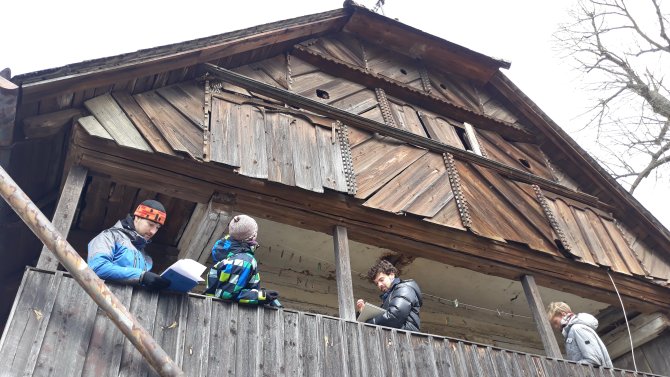
During multi‑day field trips and visits to specific buildings—often accompanied by interactions with local residents—students have the opportunity to study concrete architectural and structural details. They work on hand‑drawn detailed surveys as well as documentation using contemporary technology, including 3D scanning. The subsequent architectural designs address the restoration and new uses of the studied buildings for community purposes, seeking optimal forms of qualified heritage restoration and sensitive architectural interventions within today’s context.

Assignments from previous semesters:

  • SS 2018 (first semester of the Studio of Vernacular Architecture): regionally specific architecture of remarkably crafted wooden buildings from the 18th and 19th centuries in the Sobotecko area of the Bohemian Paradise and the Podještědí region near Liberec
  • WS 2018: the hop‑growing and beer‑making region of Žatec – the last examples of half‑timbered vernacular architecture in the town and surrounding villages; industrial and agricultural buildings connected with the cultivation, drying, and storage of hops; their documentation, research, and evaluation of possibilities for conservation, restoration, and conversion
  • SS 2019: the Podbezdězí region around the town of Bělá pod Bezdězem
  • WS 2019: agricultural homesteads in the landscape northwest of Prague (Tuchoměřice, Dobrovíz) – and the Cibulka estate in Prague
  • SS 2020: remarkable wooden architecture in the Turnov region
  • WS 2020: the Zahrádecko area near Česká Lípa
  • SS 2021: Prague 6 – Veleslavín (as a consequence of the COVID‑19 pandemic)
  • WS 2021: the Železný Brod region and the smaller settlements of Krásná and Pěnčín
  • SS 2022: the town of Polička
  • WS 2022: Mnichovo Hradiště and Loukov in the Jizera region
  • SS 2023: the Žatec region (inscribed a few months later on the UNESCO World Heritage List) and the architectural heritage related to hop cultivation
  • WS 2023: regeneration of the town of Náchod and its château complex
  • SS 2024: the town of Postoloprty in the Žatec region (summer semester)
  • WS 2024: the Erzgebirge/Krušnohoří Mining Region – the municipalities of Měděnec and Kovářská, and the locality of Königsmühle
  • SS 2025: the Cistercian landscape of Plasy – jointly with the Salzmann Studio, and the revitalization of the West Bohemian town of Plasy
  • WS 2025: Kruh u Jilemnice – regeneration of the Tuláček Farmstead and the village; Zubrnice – the National Open‑Air Museum”

For the content of this site is responsible: doc. Ing. arch. Tomáš Efler