
Prague Lesser Town 2.0
WS 2025
Lesser Town (Malá Strana) is one of the most impressive parts of Prague. Situated in an attractive location below Prague Castle, it offers remarkable buildings and gardens while remaining a district of calm pedestrian streets. It is shaped by small-scale spaces, adapted to human proportions and perception. Car traffic moves slowly and yields to pedestrians, the pace of life is calmer, greenery is more abundant, and the social life is rich. Thanks to all this, Malá Strana possesses an unrepeatable genius loci.
But is it truly unrepeatable?
Do all new neighborhoods have to follow the block-based pattern? Are we incapable of creating once again a community-oriented district full of interaction and shared life?
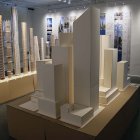
Students who choose this assignment will design a neighborhood inspired by the principles of Malá Strana – including the design of individual houses.
The assignment will include:
Analysis of non-planned settlements (density, quality, public space, etc.) – ranging from cities in developing countries to historical districts, including Malá Strana.
Study of relevant literature (e.g. IL-39 Nonplanned Settlements by Ed Schaur and Frei Otto).
Proposal for urban development based on these principles.
Design of individual houses.
The experimental ground for the studio will be Rohanský ostrov. The Rohan City project will serve as our reference point – a benchmark of quality and quantity that we will strive to surpass.


Formula 1 - Brno
WS 2025
Motorsport is among the most watched sports in the world, and its significance continues to grow. In 2023, Formula 1 reached a total audience of over 1.5 billion viewers, while more than 6 million fans attended races during the season. The British Grand Prix at Silverstone alone drew a record-breaking 480,000 spectators in a single weekend.
The Masaryk Circuit holds an exceptional tradition both in the Czech Republic and internationally: the first races were held as early as 1930 on a road course running through the city and surrounding landscape. In 1950, Brno was even considered for the inaugural Formula 1 calendar, but the political situation of Czechoslovakia prevented its inclusion.
Brno’s unique location in the heart of Central Europe gives it strong potential to become a regional hub for motorsport, attracting fans from several neighboring countries. At present, Formula 1 is considering rotating certain European Grands Prix (for example, between Belgium and the Netherlands). Given the limited number of calendar slots and the emergence of new tracks, such rotation is likely to expand – and Brno could position itself as a candidate.
The assignment is to design a modern circuit that could meet the requirements for hosting a Formula 1 Grand Prix.
The work will include design of grandstands and other facilities distributed across the venue, including spaces for teams and fans.
Consideration of a broad set of criteria, in particular:
- Landscape character and natural setting of the circuit
- Flexibility and sustainability – potential for expansion, blue-green infrastructure, adaptation to new motor technologies (electric, hydrogen)
- Multi-functionality of the venue – use of grandstands and main buildings outside race weekends (concerts, fairs, corporate events).


Own diploma thesis topic
WS 2025
Please come talk to us if you are interested to do your diploma project with us. Check out earlier graduation projects in the gallery or DSpace. We look at complex and non-typological assignments.
RECY-UPCY pavilion – Save the wood!
WS 2025
Design - Build architecture. This year, the Experimental studio Achten - Pavlíček - Sýsová with the assistance of Jiří Vele is working on an exhibition pavilion building made of wood that is looking for a second life. It is no longer in ideal shape, but it is still a shame to simply use it for energy purposes. Remains of pallets, beams, boards. For this, EXPO 25 in Hradec Králové is looking for a smart, fast and creative partner to produce an exhibition building that will serve both as a place for passers-by to rest, as well as to attract attention and, ideally, to share its photos with an enthusiastic audience. It should stand in the courtyard in front of the exhibition spaces. It should be an eye-catcher. Several people should be able to sit there. And it should not rain inside.
Last but not least, it will be a blast. The more prestigious the pavilion, the shorter the time for design and production. EXPO is already taking place on November 11, 2025! So we will throw ourselves into it and we will do what we can. The main thing will be a cleverly conceived design that takes into account both the lack of time and the potential involvement of a wider range of auxiliary forces. The implementation can take place during the expo with the help of the organizers, the public, etc. In the end, if the construction is successful, the U dvou přátel café will want to keep it for sitting. And we will be able to observe its aging from afar.
The atelier will include partial participation in the Hackathon focused on upcycling wood from pallets on October 5th - 10th and a subsequent visit to the International Recycled Design Festival on October 11th in Hradec Králové. The advantage is then the completion of the optional atelier in mid-November and the subsequent freedom to complete the second atelier.
But what is EXPERIMENT for? To try the impossible!


